
The recent grilling of TikTok’s CEO in front of an almost entirely hostile congressional committee was a reminder that a hardening stance against China is one of the few areas of genuine bipartisanship. That and an antagonistic stance toward Big Tech, so TikTok actually manages to check two boxes.

China has “both the intent to reshape the international order” and the power to do so, he said. The United States will seek to rally coalitions of other nations to meet Beijing’s challenge.

The scrutiny intensified when Didi elected to list its shares in the U.S. In the eyes of the Chinese government, that raised the possibility that Didi would then share its precious domestic data with U.S. counterparties.

Toughness in the face of China may be good domestic politics, but it is still bad policy if the goal is enhancing U.S. economic power and global security.

In an interview this week, President-elect Joe Biden said that he’s not planning to reverse tariffs on Chinese goods imported into the United States as quickly as he plans to reverse other Trump-era policies…

After weeks of uncertainty following President Donald Trump’s executive order on TikTok—ordering its Chinese parent company to divest its American operations within 90 days—the video app that has stolen the hearts, if not the data, of millions of teens has found an American partner: Oracle.

And he would recognize in the United States today something very similar to early 1933, that in the throes of a viral pandemic, we are mired in a psychological one as well: we are in the grip of fear, and it is paralyzing us.

It would be difficult to select a worse moment not just to escalate the rhetoric against China for its culpability in the globalization of COVID-19 but to consider a raft of economic sanctions.

But, in truth, there are things much worse than death. There always have been. Death is as much a part of the human condition as birth, love, sex, hunger, community, war, family. It is a natural part of the cycle of life, however, challenging that is for most of us.

Three months into the global coronavirus pandemic, there are growing signs that the long marriage between China and the US—indeed between China and the developed world—is coming apart. That’s prompted “a rethink of how much any country wants to be reliant on any other country,”

Any look at the news suggests that we’re in the early stages of a society-changing response to an unpredictable virus that will have vastly negative consequences for the economy, not just in the U.S., but around the world.

In these self-isolated days, silver linings are almost entirely obscured by clouds. Yet should the worst-case predictions of mass deaths and overwhelmed health care systems not come to pass, there’s a case to be made that the way the virus is spreading… China’s industrial production fell for the first time on record

Over the past week, the coronavirus has gone from an Asian contagion with ripple effects on international supply chains to a global pandemic that will plunge the whole world into recession.

If you detect a note of skepticism already creeping in, it’s because this pseudo-deal deserves not just skepticism but calling out as a dramatic failure of U.S. policy that will have lasting and deleterious effects.

The Trump administration, with its fixation on trade balances and its view that the Chinese have ripped off U.S. consumers for decades, clearly initiated the current trade war. But the truth is that American animosity to the rise of China can’t all be attributed to President Donald Trump.

As President Donald Trump escalates his trade war with China, the administration is adamant that China is bearing the brunt of the tariffs. “They’re not hurting anybody [in the United States],” White House trade adviser Peter Navarro said on CNN’s “State of the Union” on Sunday. “They’re hurting China.”

Having hundreds of billions of dollars of Chinese investment in the United States was a powerful source of influence that is dwindling rapidly and is in fact shrinking more quickly than bilateral trade. Tariffs can be imposed or lifted almost at the whim of a presidential tweet, but creating a welcoming climate for inward investment takes longer to build.

The China-US trade conflict is taking a more severe turn. President Trump announced a 10 percent tariff on an additional $300 billion of Chinese imports; the Chinese government responded by allowing its currency, the yuan, to fall to more than 7 to the dollar—the lowest in a decade. The US government then formally labeled China a “currency manipulator,” which carries no formal penalty but sets in motion a process that might lead to sanctions by the International Monetary Fund.

Apple has a Huawei problem. Of the myriad issues raised by the evolving and intensifying US-China trade Cold War, the knock-on effects on Apple have been perhaps least appreciated. And not just Apple, of course, but a slew of American companies that have both shifted production to China over the past two decades and, more vitally, tapped into Chinese middle-class consumers as a source of growth and profits.

When President Donald Trump made good on his promise to be “Tariff Man” this week, he sent economists into a lather, pushed the stock markets onto a wild and largely downward ride, and thrilled parts of his political base, who saw a president finally willing to use his bluntest policy weapon against America’s biggest economic rival.
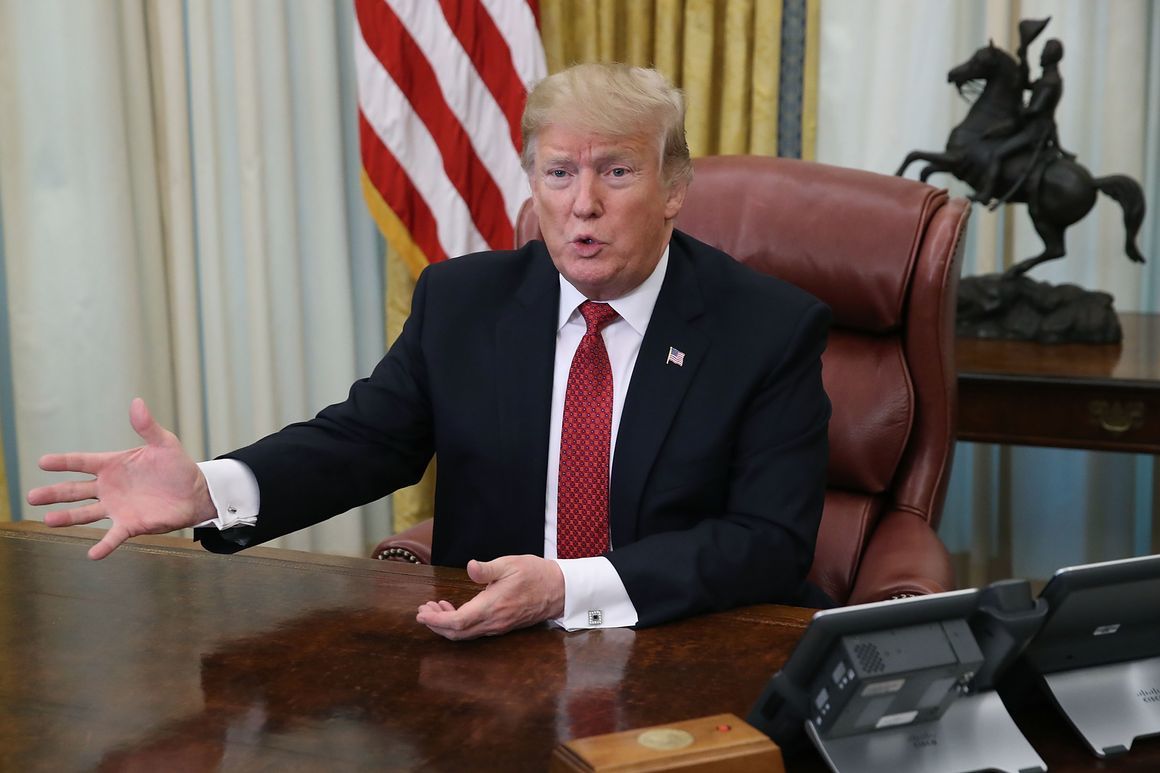
The yearlong China-U.S. trade war now appears to be in its final stages. Tariffs will be lifted, Beijing will promise to buy more American goods and take a harder stance on technology transfers and industrial espionage, and Trump will declare victory — but it will be Pyrrhic, at best.

The unveiling of a Green New Deal last week provoked a mix of enthusiasm and derision. For each voice embracing the radical vision to decarbonize the American economy within a decade, there was another voice decrying the plan as economically unrealistic, technologically impossible, and politically untenable.

https://video.foxbusiness.com/v/5987286277001/?#sp=show-clips/all-shows

The U.S.-China relationship seemed to improve last week at the G-20 summit in Argentina. Then, an ominous development: American authorities asked Canada to arrest the chief financial officer of one of China’s largest technologies companies.

Zachary reviews three new books, each with a different perspective on America’s role in global politics — and the nation’s future as a world leader.

Relations between the United States and China, which had been slowly deteriorating for several years, have taken a decisive turn for the worse. With all indications pointing to things getting substantially more strained before they get better, talk of a new Cold War has become common. And if that happens, it will be because the United States.

Though Donald Trump defends his deployment of tariffs as a radical shake-up of world trade, he is using a dusty playbook. While the president certainly has the legal authority to impose duties, the statutes on which his administration relies are based an economic order that no longer exists.

In the latest installment of the simmering trade war, the Trump administration reportedly plans to impose restrictions on Chinese investments in US technology companies and American technology exports to China. If implemented as rumored, any company with more than 25 percent Chinese ownership

So, about that trade war. Recent days have presented a dizzying series of reversals followed by reversals of reversals over whether, when, or if the United States will impose punitive tariffs on China in response to unresolved issues, ranging from intellectual property theft to lack of access
Tweets from @ZacharyKarabell

In recent weeks, President Trump has threatened tariffs on $500 billion of Chinese imports, on $200 billion of auto imports from various countries and on any nation he perceives as ripping off the United States.