
The brief, contentious engagement of Amazon and New York City ended abruptly this week, with Amazon deciding that its choice of New York as a site for a new headquarters was not right after all, and that what the company had wanted wasn’t in the cards.

Trump has proven adept at taking credit via tweet for a series of decisions by multinational companies to invest in factories and hiring in the United States, most recently the announcement by Fiat (which is part of Chrysler Motors) to invest $1 billion to modernize two of its auto plants in Michigan and Ohio.

Listen to President Obama, and you’ll hear that job growth is stronger than at any point in the past 20 years, and — as he said in his final State of the Union address — “anyone claiming that America’s economy is in decline is peddling fiction.”

The monthly ritual known as the jobs report made its appearance last week, followed metronomically by the monthly ritual of commentary and political reaction to the jobs report. It was a good report, as they go, with “ better-than-expected” job creation, more workers returning to look for work (hence a slightly higher unemployment rate of 5.7 percent) and major upward revisions to reported job creation in November and December of 2014.

CNBC Contributor Zachary Karabell, weighs on the nature of U.S. jobs growth and higher wages.

With only one more report left, 2014 is shaping up to be the best year for job creation since 1999. Predictably enough, last week’s strong numbers (321,000 jobs added) inspired some commentators to suggest that the report was not just good news,

This past week marked the annual gathering of bankers, financial officials, and other economic experts hosted by the Kansas City Federal Reserve Bank in Jackson Hole, Wyoming. On Friday, Fed Chair Janet Yellen and European Central Bank head Mario Draghi both spoke; in a slow week for the markets, these speeches received the bulk of the econ media’s attention, and Yellen’s remarks were heralded for days as the week’s major financial event.

Six years after the beginning of the financial crisis of 2008–2009, the best that can be said about the public mood in the United States is that people are no longer catastrophically pessimistic. Instead, they are deeply pessimistic.

In the wake of last week’s job report, there has been a flurry of new debate about what precisely is keeping job creation in the United States so anemic.The pivotal issue is whether the challenges facing the job market are cyclical or structural. The cyclical hypothesis is that we are still suffering an employment hangover from the financial crisis and sharp recession of 2008–09, made worse by limp or insufficient government responses.

The latest edition of the Bureau of Labor Statistics report is out, and it shows that, statistically speaking, the U.S. added 175,000 new jobs in February and its unemployment rate rose slightly to 6.7 percent. The insta-reaction world greeted the report as better news than expected.

In an excerpt from his book, reprinted here by permission of Simon & Schuster, Karabell traces how employment data collection originated as a progressive antidote to economic inequality. But even the reformists who developed those statistics, Karabell notes, were wary of the “mania for statistics.”

This Thursday the Conference Board, a global business association, released its monthly index of “leading economic indicators.” Like the unemployment and inflation, housing starts, G.D.P. changes and other figures, these numbers arrive in metronomic waves.

Few topics have been more fraught than the fate of U.S. manufacturing. The sharp loss of manufacturing jobs since 2008 has triggered legitimate concern that America’s best days may have passed.

In an unabashed endorsement of government action to alleviate the plight of the poor, this week President Obama commemorated the 50th anniversary of the War on Poverty with his own call for new policies to address the continued struggles of tens of millions of Americans.
In an age of connectivity, how do different generations interact? Do they trust each other? How do companies seek, find and retain key talent as the worldview of people of different ages in the workplace differs? What does the contrast in attitudes between Millenials and everyone else portend for productivity and business’s future?

In a world increasingly framed by economic debates, the phrase "the laws of economics" has become ever more prevalent. As the U.S. Senate prepares to unveil a new immigration bill, much of the discussion centers on the economics of illegal immigration and the incentives for employers to hire undocumented workers.

Today's U.S. Labor Department report on jobs confirms what we've known for more than a year: We have entered a new normal for jobs, with marginal gains, marginal losses and higher levels of unemployment becoming the unfortunate norm.

Today’s jobs report, released to a sweltering nation, will do nothing to dispel the political heat. According to numbers compiled by the Bureau of Labor Statistics, job growth remained stubbornly anemic, with 80,000 new jobs added in June.

Today’s employment figures show that America has entered job stasis. The headline number—69,000 jobs added—was weak at best, made worse by revised data for March and April that subtracted another 50,000 jobs, give or take. The unemployment rate nudged up to 8.2 percent from 8.1 percent, but truly the most notable thing about this release was that there was nothing truly notable.

The Nobel laureate insists our unemployment problems are part of a chronic cycle and require government action—and says arguing the issue is structural is an excuse for doing nothing. Zachary Karabell on why that stance is misguided.

Today’s anemic jobs report is yet another indication that the unemployment picture in the United States is getting neither better nor worse. It is also yet another piece of evidence that there is a chronic, long-term structural employment issue in America. It is not an acute crisis; it isn’t getting much worse; and it isn’t going away anytime soon.
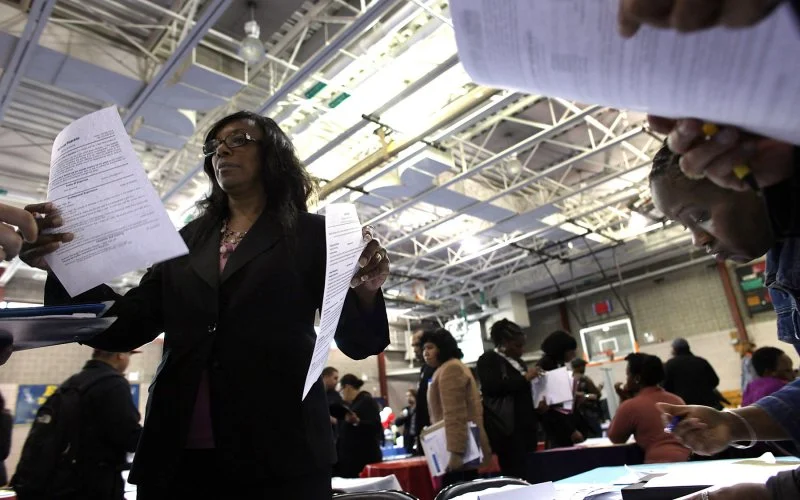
Today’s anemic jobs report is yet another indication that the unemployment picture in the United States is getting neither better nor worse. It is also yet another piece of evidence that there is a chronic, long-term structural employment issue in America. It is not an acute crisis; it isn’t getting much worse; and it isn’t going away anytime soon.
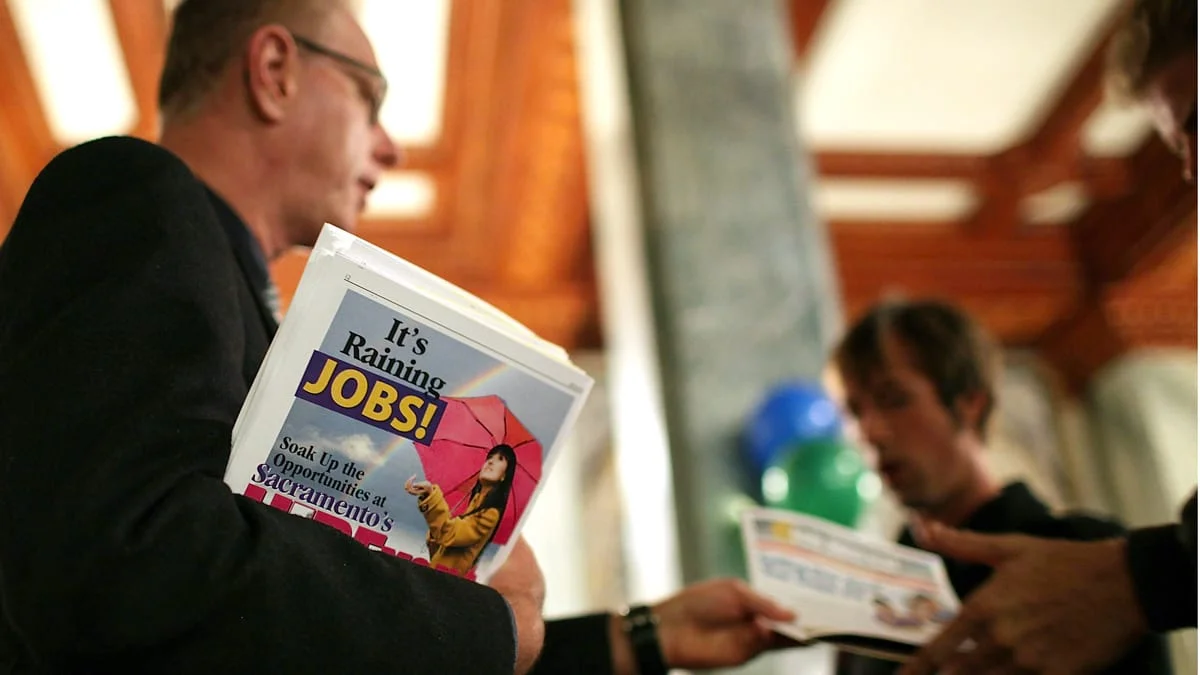
Today’s latest installment of the official jobs data should be final proof—if more is needed—that the U.S. economy is no longer mired an acute employment crisis. According to the Bureau of Labor Statistics, the U.S. labor force grew by 120,000 in March, continuing a trend now more than a year old of steady improvement

Newsweek's Zachary Karabell explains whether the country is escaping the gravity at the bottom of unemployment.

Friday’s monthly dose of official information about the U.S. employment picture, a.k.a. the jobs report, showed very little change. The official unemployment rate stayed the same, at 8.3 percent, and 227,000 jobs were added.

As the overall economic picture in the United States continues to brighten, the job market remains a contentious issue. Yes, the headline official unemployment rate has fallen sharply in recent months to just over 8 percent. But most Americans, judging from polls, remain pessimistic about jobs and see a challenging landscape of high unemployment and stagnant wages.

Friday’s jobs report proved what has been increasingly clear these past months: Unemployment remains stubbornly high, has stopped getting appreciably worse, appears to be getting better, and will be a chronic issue even as the overall economic picture has brightened considerably.

Today’s monthly jobs report from the federal government is undoubtedly good news for the White House, the Obama administration and for the Democrats in general this election year. It may also good news for American financial markets, which have for now reversed last year’s late trend and are clinging to whatever good news they can.

At a press briefing at the White House Monday, President Obama formally announced a package revealed over the weekend to trim $3 trillion off the federal deficit over the next several years. Picking up on the theme of his recent jobs speech, Obama demanded that Congress move on the act immediately.
Tweets from @ZacharyKarabell

In President Trump's address to Congress on Tuesday, he promised to bring "historic" tax cuts. Zachary Karabell, a contributing editor at Politico, spoke to CBS NEWS about the steps that need to be taken for this tax plan to become reality.