
The scrutiny intensified when Didi elected to list its shares in the U.S. In the eyes of the Chinese government, that raised the possibility that Didi would then share its precious domestic data with U.S. counterparties.

US regulators have not yet shown all their cards, but they should pause before arguing that too big equals anticompetitive, or seeking to break up or substantially restructure the tech giants. Instead, they might want to look to Europe.
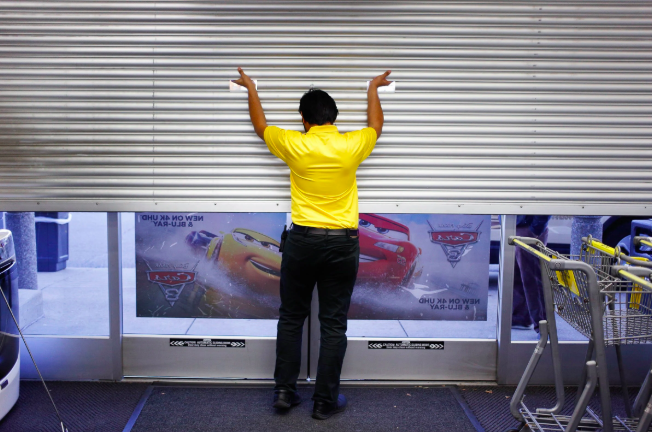
Far from facing extinction, Best Buy is poised for another year of solid growth. Its relative success stands in sharp contrast to the fate of retail in general, and its formula should serve as a reminder that retailing may be changing, but not everything will be ecommerce.

The ambition is grand: “Reinvent money. Transform the global economy. So people everywhere can live better lives.” So said Facebook last month in unveiling Libra, its new digital payment service. The company heralded it as “a simple global currency and financial infrastructure that empowers billions of people.” If fully launched, Libra would allow Facebook users to buy and sell goods and services around the world and across borders using a digital cryptocurrency…

Rumblings about the role of Big Tech in American society have coalesced into a storm long coming, with revelations that the Department of Justice and the Federal Trade Commission are contemplating sweeping antitrust investigations of Facebook, Google, Amazon, and Apple.

Apple has a Huawei problem. Of the myriad issues raised by the evolving and intensifying US-China trade Cold War, the knock-on effects on Apple have been perhaps least appreciated. And not just Apple, of course, but a slew of American companies that have both shifted production to China over the past two decades and, more vitally, tapped into Chinese middle-class consumers as a source of growth and profits.

Surveying the reactions to the latest revelation that Facebook played fast and loose with user data, it was hard not to harken back to what Scott McNally, the founding CEO of Sun Microsystems, told a group of reporters, including one from WIRED, in 1999: “You have zero privacy anyway. Get over it.”

The past three months have not been kind to large public technology companies. Amid crescendos of criticism about monopolistic power, these companies saw their market value plummet. The rampant selling has leveled off, at least for the moment, so it’s an opportune time to ask: What comes next?

Big companies attract big attention, and none quite as much as Apple. Its quarterly reports have become something of a collective soothsaying moment for stock markets and the tech industry, and so Thursday’s report garnered its usual share of outsized attention.

As if there wasn’t enough angst in the world, what with the Washington soap opera, #MeToo, false nuclear alerts, and a general sense of apprehension, now we also have a growing sense of alarm about how smartphones and their applications are impacting children.

Last week’s repeal of net neutrality regulations by the Federal Communications Commission generated considerable controversy. Many characterized the decision as a win for telecom and cable companies at the expense of both consumers and content companies.

For years, the ascent of tech has broadly been viewed as positive, heralding an era of increased productivity and greater communication. But recently, the litany of corporate missteps and a general sense of power accreting to a few extraordinarily rich and powerful companies and the men–yes, largely men–who lead them has triggered a wave of criticisms of the once-Teflon culture of the Valley.

Bitcoin: Fad or the future? The question has dogged the digital currency since its inception nearly a decade ago, and recent developments raise it anew. Last week, a new variant of bitcoin emerged via a “fork” in its underlying code, threatening to confuse and divide the still-small world of bitcoin adherents.

With the S&P 500 up nearly 10% for the year through mid-June, many investors are nervous about what lies ahead. Even more nerve-wracking is that an outsized portion of the total returns have been generated by just a few stocks.

News that Amazon intends to buy Whole Foods Market for more than $13 billion was greeted jubilantly by financial markets, with Amazon’s stock rising 2.5 percent, almost enough to cover the entire purchase. At the same time, the shares of other grocery retailers, ranging from Kroger’s to Walmart,

After this weekend’s attacks in London, President Trump became embroiled in a spat with the city’s mayor, where the president criticized British authorities for not taking the threat of terrorism seriously enough. In its crude way, that confrontation underscored a deeper divide between the United States and much of the rest of the world over what taking terrorism seriously means.

When it comes to productivity, only two things are undebatable: that the official rate of U.S. productivity growth has stalled since at least 2007, having started to slow before then, and that there is no consensus about why or what to do about it. There is, additionally, some broad consensus that without stronger productivity growth going forward

APPLE JUST BECAME the first US company to surpass $800 billion in market capitalization. Speculation quickly followed that Apple would soon become the first $1 trillion company, with a rumored $1,000 iPhone 8 coming at year’s end. The company’s share price has been on a tear since the beginning of the year, and sales of the iPhone 7

The world finds itself in an age saturated with anxiety—at least, that’s the sense created by the daily deluge of news portraying a grim present of economic hardship, global tensions, terrorism, and political upheaval. The five-year-old site Upworthy doesn’t want you to see the world that way.
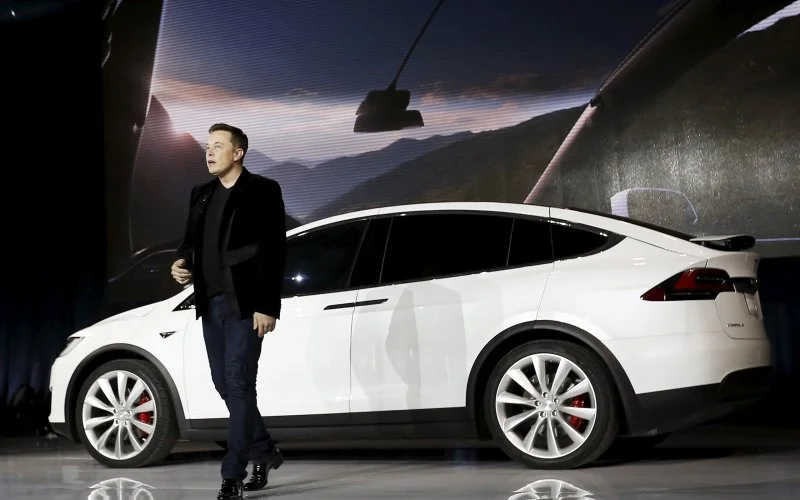
On Tuesday, Tesla Motors—the eclectic, aggressive electric-car company that is promising to upend the automotive industry—was in the news for two seemingly distinct but in fact related issues.

No company wants to report that its sales have declined. But when you’re Apple, which has consistently seen its revenues grow for more than twelve years, it’s not just bad news but a serious kink in a joyful narrative of boundless possibility. Earlier this week the company—the most valuable in the U.S.—told shareholders that revenues had declined by thirteen per cent.

For the past few months, financial markets have been positioning for a change in Federal Reserve policy to move from “very easy and accommodative” to “easy and accommodative.” The decision of the Fed, finally, to raise short-term lending rates by 25 basis points was met with relief that months of will-they won’t-they were finally over. At the same time, the energy and commodity complex has continued to melt down as prices plummet. The result has been both an unusual amount of turmoil in fixed income markets and a rising chorus of voices anxiously drawing parallels to 2008-2009.

We’ve seen a significant move away from how most people invested in the 20th century—actively and with the at times costly advice and direction of advisors and brokers—towards a more digitally enhanced, passively implemented set of strategies. Some of that trend is inevitable and a useful addition to the suite of options. But as we have said, and continue to maintain, the rush toward passive investing is not without issues, and it must be balanced. There can be too much of a good thing. Today’s rush towards passive, ultra-low cost investing solutions must be tempered with questions: What is being gained? What potentially could be lost?

Silicon Valley is often held up as the gold standard of revolution and transformation, but what if replicating the Valley isn’t the point? Other hives of innovation and growth buzz around the country and in almost every city around the world. Where will innovation happen, and how will what we build change as its venue changes?

Imagine that you want to buy a home. You might find a real-estate agent to show you around, which is a very 20th-century way of doing things. Or you might go 21st century and use the Web to research prices and available properties and to take a few virtual tours.

On July 1, the film Terminator: Genisys will debut in theaters across the United States and throughout the world. It will be the fourth installment of a series that began more than 30 years ago, which in many ways defined contemporary fears of the rise of the machines: a world where the brilliant programs designed by humans themselves become the masters and turn against their human creators.

The Envestnet Edge from March 2015

Discussion on the Internet of Things

Panel discussion on Navigating China's Internet Maze
Tweets from @ZacharyKarabell

PETER THIEL, NEVER one to keep a low profile, made his most recent set of waves with reports that he is prepared to decamp from Silicon Valley to more benign haunts in Los Angeles along with several of his companies. His rationale, according to a piece in the Wall Street Journal, is that the Valley is